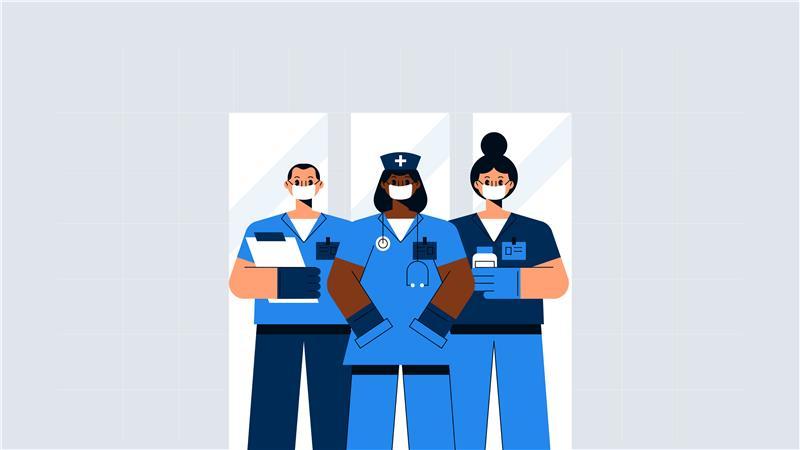
What every nurse and allied professional should know going into 2026
As 2025 draws to a close, the U.S. healthcare industry continues its pace of transformation, never experienced before. Nurses, allied health professionals, and clinical staff have had a year of rapid innovation, changing models of care, and shifting workforce dynamics.
From the sustained nursing shortage to the advancement of digital health, 2025 has underscored one key truth: adaptability is the cornerstone of career growth.
The following end-of-year guide highlights trends, opportunities, and strategies that every healthcare professional should know to stay competitive as we head into 2026.
1. Continued High Demand for Skilled Healthcare Professionals
-
Nursing Shortages: Despite hiring surges in 2025, there are still major demands in many U.S. hospitals and long-term care facilities for registered nurses, ICU specialists, and travel nurses.
-
Allied Health Expansion: Respiratory therapists, physical therapists, occupational therapists, and biomedical equipment technicians remain in high demand, especially within rehabilitation and outpatient care.
-
Emerging Specialties: Home healthcare, telehealth, and critical care remain among the fastest-growing areas.
Insight: Those with specialty certifications, advanced credentials, and cross-disciplinary experience will be the noticeable professionals in the competitive hiring landscape of 2026.
2. Skills-Based Hiring Becomes the Norm
- Employers have moved decisively to skills-first hiring, placing as much or more value on hands-on expertise and certifications than they do on traditional degrees alone.
- Examples of sought-after certifications include ICU, BMET, ACLS, Telehealth Competency, and Clinical Informatics.
- Recruiters also underscore adaptability, problem-solving, and communication skills training, especially for hybrid or tech-enabled healthcare roles.
Insight: Investment in continuing education, digital skills, and role-specific certifications becomes an operational imperative to attain lifelong career security.
3. Telehealth and Digital Care Continue to Redefine Work
- Telehealth has moved from being a pandemic necessity to the mainstream model of healthcare delivery in 2025.
- The expansion of roles such as remote nursing, patient monitoring, and digital triage is giving professionals flexible schedules and nationwide work options.
- This means that hospitals will increasingly utilize IoT and AI-powered tools to have healthcare teams work smoothly with connected devices and digital records.
Insight: Digital literacy, virtual communication, and adaptability to new technologies will be paramount for those entering the nursing and allied professions in 2026.
4. Evolving Hiring and Retention Strategies
To tackle burnout and staffing shortages, hospitals are adopting more strategic retention and hiring methods:
-
Flexible Work Models: Rotational schedules and part-time contracts for a better work-life balance.
-
Career Development Programs: Paid training and leadership tracks for nurses and allied professionals.
-
Inclusive Recruitment: Diversity and inclusion remain at the forefront to ensure a policy of equal opportunities.
-
Strategic Staffing Partners: Firms like SGS Consulting work in partnership to help professionals find specialized jobs faster, including travel assignments and permanent placements.
The take-home message here is that partnering with trusted staffing experts opens the way to more exclusive openings and quicker career advancement.
5. The 2026 Outlook for Healthcare Professionals
The outlook for the workforce in health care remains positive going into the year 2026:
- Nursing and allied health positions are expected to grow by over 6% through the year 2026, according to U.S. labor data.
- Technology-driven jobs, such as telehealth coordinators, biomedical engineers, and clinical data analysts, are also growing rapidly.
- Professionals who adapt to the use of AI tools, automation, and data-driven care will find greater opportunities and flexibility in the years to come.
Insight: The future belongs to those professionals who are technologically savvy, certified, and open to continuous learning.
Conclusion
The healthcare landscape at the end of 2025 is both challenging and full of promise. Success for nurses and allied professionals will come through continuous skill-building, embracing technology, and exploring new career paths in 2026.
At SGS Consulting, we help healthcare professionals find rewarding roles nationwide, from travel nursing assignments to permanent positions with leading hospitals. Looking for your next opportunity in healthcare?
Apply at: resumes@sgsconsulting.com. View the currently available positions on our Healthcare Jobs page or visit our About Us section to explore how SGS Consulting supports professionals.


